
Services
Monthly bookkeeping run entirely in Xero — closed, reviewed and proven every period by the team that does the work.
Bookkeeping packages

Cash flow in Xero
Which means the dashboard, the snapshot and the projection are all exactly as reliable as the reconciliation behind them, and no more. Most businesses looking for better cash visibility do not need a different screen. They need the four numbers underneath to be true. This is what Xero shows you, what each view assumes, and what has to be right before any of it is worth acting on.
The number itself
A bank balance is a fact. A cash position is a calculation, and calculations inherit the quality of what went into them.
Your cash position is the bank balance adjusted for what has been committed but not yet moved: invoices raised and unpaid, bills approved and unpaid, payroll due, tax accrued. Xero can assemble that in seconds. What it cannot do is know about the bill sitting in somebody's inbox, the invoice that was never raised, or the direct debit that stopped being reconciled four months ago.
So the first question about any cash figure is not whether it looks healthy. It is what the figure was built from. A business with $48,000 in the bank and $61,000 of unentered bills is not solvent, it is uninformed.
If two people in the business would give you two different answers to “how much cash do we have available,” the problem is not that they disagree. It is that the file does not answer the question, so both of them are estimating.
The screens
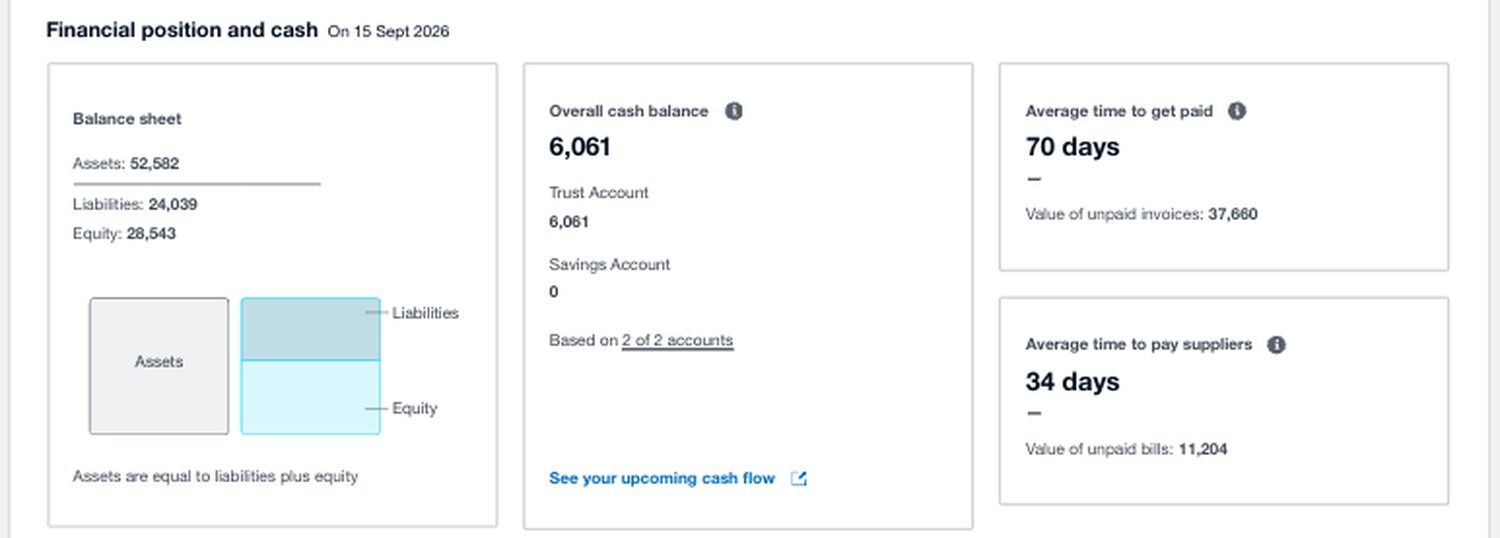
Four places show you cash, each answering a different question. Using the wrong one is how people end up trusting a number that was never meant to carry that weight.
The order matters. Aged receivables and aged payables are the inputs; the projection is the output. A business that reads the projection without reading the aging is reading a conclusion without its evidence.
The prerequisites
Before any cash view in Xero means anything, four things have to hold. Each one is checkable in a few minutes, and each one fails quietly.
Three of these four are reconciliation work, not analysis. Cash visibility is a bookkeeping outcome. The reporting layer only reveals what the ledger already knows.
The projection
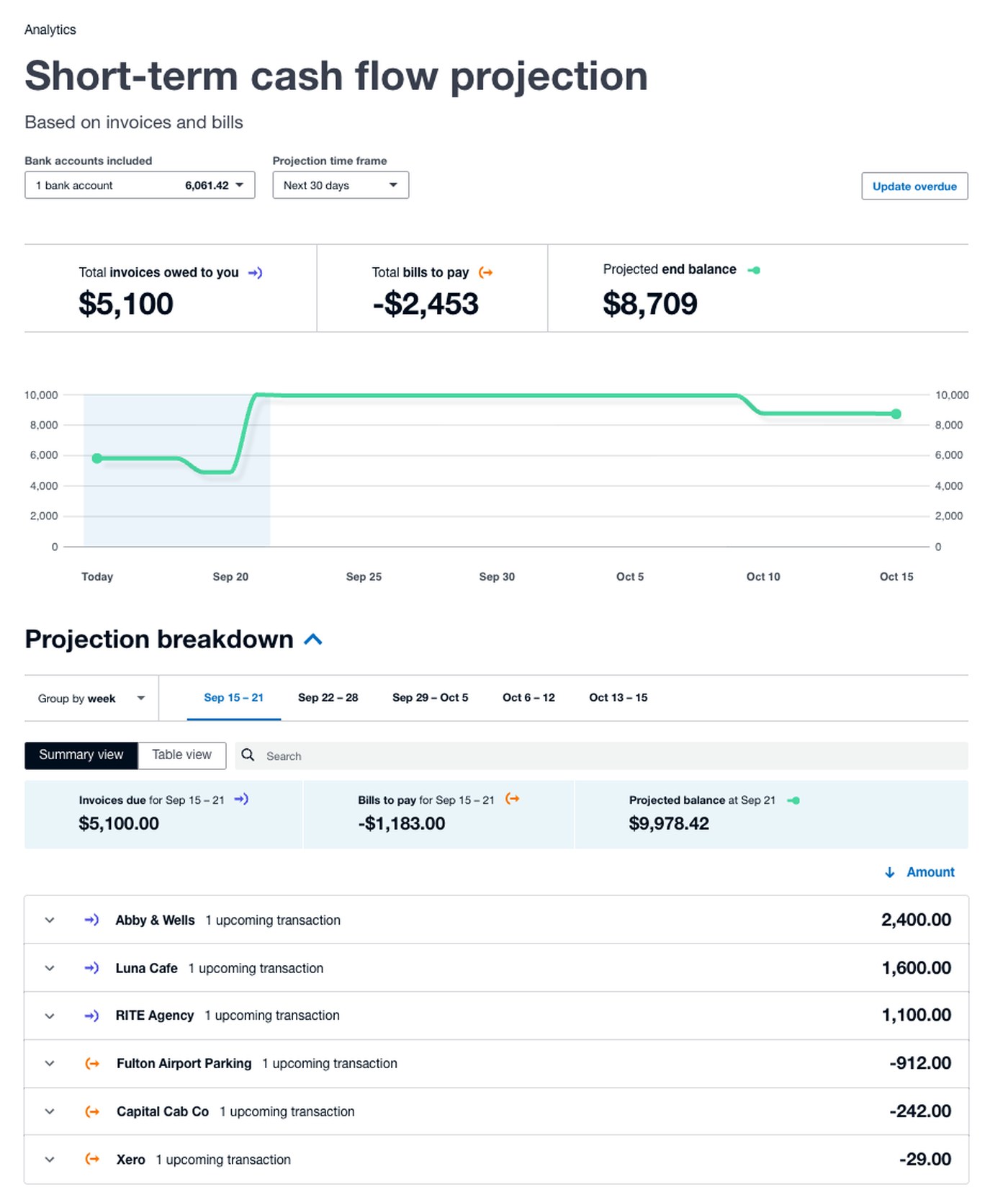
Xero’s short-term cash flow view projects forward from what is already recorded. Understanding what it is reading explains both its usefulness and its limits.
It takes the invoices and bills in your file, uses their due dates, and plots the resulting balance forward. Everything it shows you is a consequence of documents that already exist. It is arithmetic on your own data, performed instantly and without judgment.
Three things follow from that.
Used properly, it is a very good early warning for the next few weeks, because the near term is mostly determined by documents that already exist. Used as a forecast, it will flatter you.
The levers
Cash position is an outcome of four operational habits. None of them is a forecasting exercise, and all of them are visible in Xero.
The gap between doing the work and sending the invoice is cash you have already earned and not asked for. It is also the easiest thing to fix, and the most commonly broken, because invoicing competes with delivery and delivery always wins. Repeating invoices and quote conversion remove the decision entirely for anything predictable.
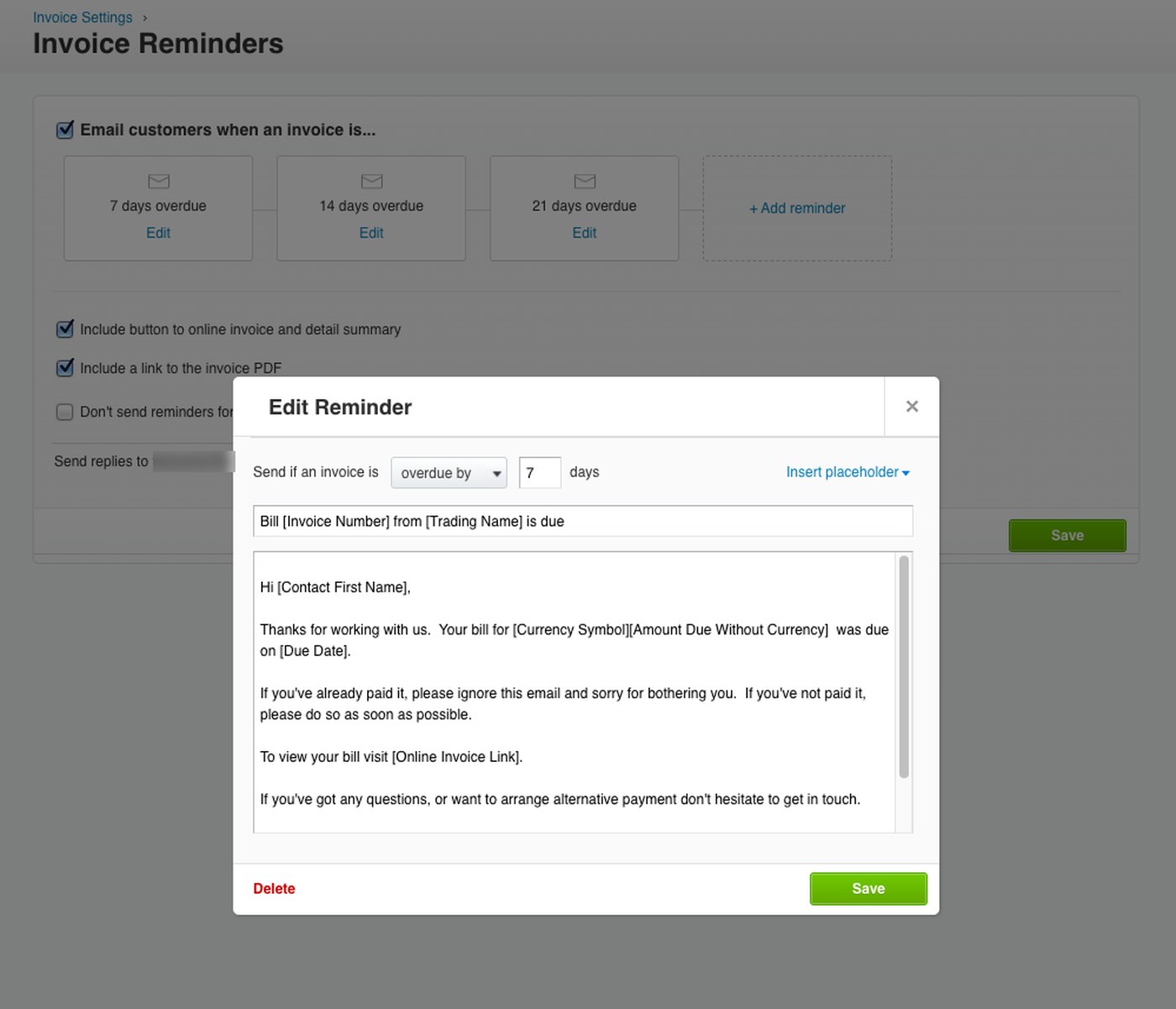
Xero sends invoice reminders on a schedule you define, under your own name. Most files have the feature switched off. A configured ladder collects earlier than a person who chases when they think of it, because it never forgets and never feels awkward.
A payment received and not matched leaves the invoice showing as unpaid, which corrupts the aging, which corrupts every collection decision made from it. Partial payments and single receipts covering several invoices are where this breaks.
Entering bills on arrival is what makes the payables side of the cash position real. Paying them on terms rather than on receipt keeps the cash in your account for the period you agreed to. Both require the bill to be in the file.
| Habit | Where it shows | What good looks like |
|---|---|---|
| Invoices out on time | Draft invoices; repeating invoice templates | Nothing sitting in draft past the week it was earned |
| Reminders running | Invoice reminders settings | Switched on, with a ladder rather than a single nudge |
| Cash applied | Aged Receivables Detail | No paid invoices still showing outstanding |
| Bills entered | Bills awaiting payment; the payables control account | Aging ties to the balance sheet, with nothing arriving unrecorded |
The boundary
Everything above is bookkeeping. It produces a cash position you can act on and a short-term view you can trust. It is not financial strategy.
Scenario modelling, fundraising, covenant planning, capital structure and the conversations that go with them belong to a CFO, fractional or otherwise. That work needs presence, judgment about your market, and a relationship with your bank. We do not do it and we will tell you so in the first conversation.
What we do is make that work possible. A fractional CFO handed a reconciled file with accurate aging spends their time on the decision. Handed an unreconciled one, they spend it reconstructing, at CFO rates.
Questions
Next
Start with whether the four things on this page are true in your file. The 32-point health check answers that in writing, and you keep the findings either way.
Book a free 30-minute call See the 32-point check