
Who we serve

You did not start a business in order to do its bookkeeping.

The work that pays comes first, and it should. So the books get done last, at night, at speed, by someone who has already worked a full day. That is not a discipline problem. It is what happens to the one task with no client waiting on it.

The real bill

What Doing It Yourself Actually Costs

The hours are the obvious cost and the smallest one. Two others matter more, and neither shows up anywhere you would notice.

  • You decide on old numbers. If the books are six weeks behind, every judgement you make about hiring, pricing or spending is made against a picture of a business you were running in the spring. The decisions still get made. They just get made blind.
  • Small errors set. A transaction coded to the wrong account, a personal charge left in, an account that has not reconciled since March. None of it is dramatic in the week it happens. A year later it is a clean-up project, and the version of your accounts that your tax preparer works from is the version you built at eleven at night.
  • And the hours, which are not the ones you think. It is rarely a solid block. It is the twenty minutes on a Tuesday, the thing you meant to file, the receipt you go looking for, the low background sense of being behind. That is the part people describe as the relief, afterwards.

None of this means you are bad at it. Owners are usually perfectly capable of doing their own books. The question is whether the hour is worth more spent on the books or spent on the business, and for almost everyone the answer stopped being close a while ago.

The honest objection

Handing Over the Books Is Not Handing Over the Money

The reason most owners wait longer than they should is not cost. It is that giving someone your accounting feels like giving them the keys, and when you built the business yourself, watching the money is not a task. It is a habit you trust.

So it is worth being exact about what moves and what does not.

What we take on

  • Coding every transaction and reconciling every account
  • Bills in, recorded and ready for you to approve
  • Invoices out, and reminders that go out under your name on a schedule you set
  • The month-end close, and statements by a fixed date
  • Being the person your tax preparer emails instead of you

What never leaves you

  • Bank access and signing authority
  • Approving what gets paid, and when
  • Deciding what the business spends money on
  • The relationship with every customer and supplier
  • Visibility. You can open the file any day and see the same thing we see

A question worth asking any bookkeeper

Can you move money out of my accounts? The answer should be no. We prepare, record and reconcile. Releasing a payment is an act by someone with authority in your business, and that separation is not a formality. It is the main control a small company has, and it costs nothing to keep.

The rhythm

What a Month Actually Looks Like

No mystery to it. The value is that it happens on the same days whether or not you have had a hard week.

Weekly

Everything reconciled

Bank and card accounts matched against the feed, transactions coded, anything ambiguous queued as a question rather than guessed at.

Through the month

Bills and invoices move

Supplier bills captured and entered as they arrive. Your invoices raised and sent, with reminders running behind them automatically.

Month end

The close

Accruals, prepayments, owner drawings and anything unusual dealt with, then the period locked so the numbers stop moving after you have read them.

By a fixed date

Statements, and a short note

Profit and loss, balance sheet and cash position, plus a few lines on what changed and anything worth your attention. Not a report you have to decode.
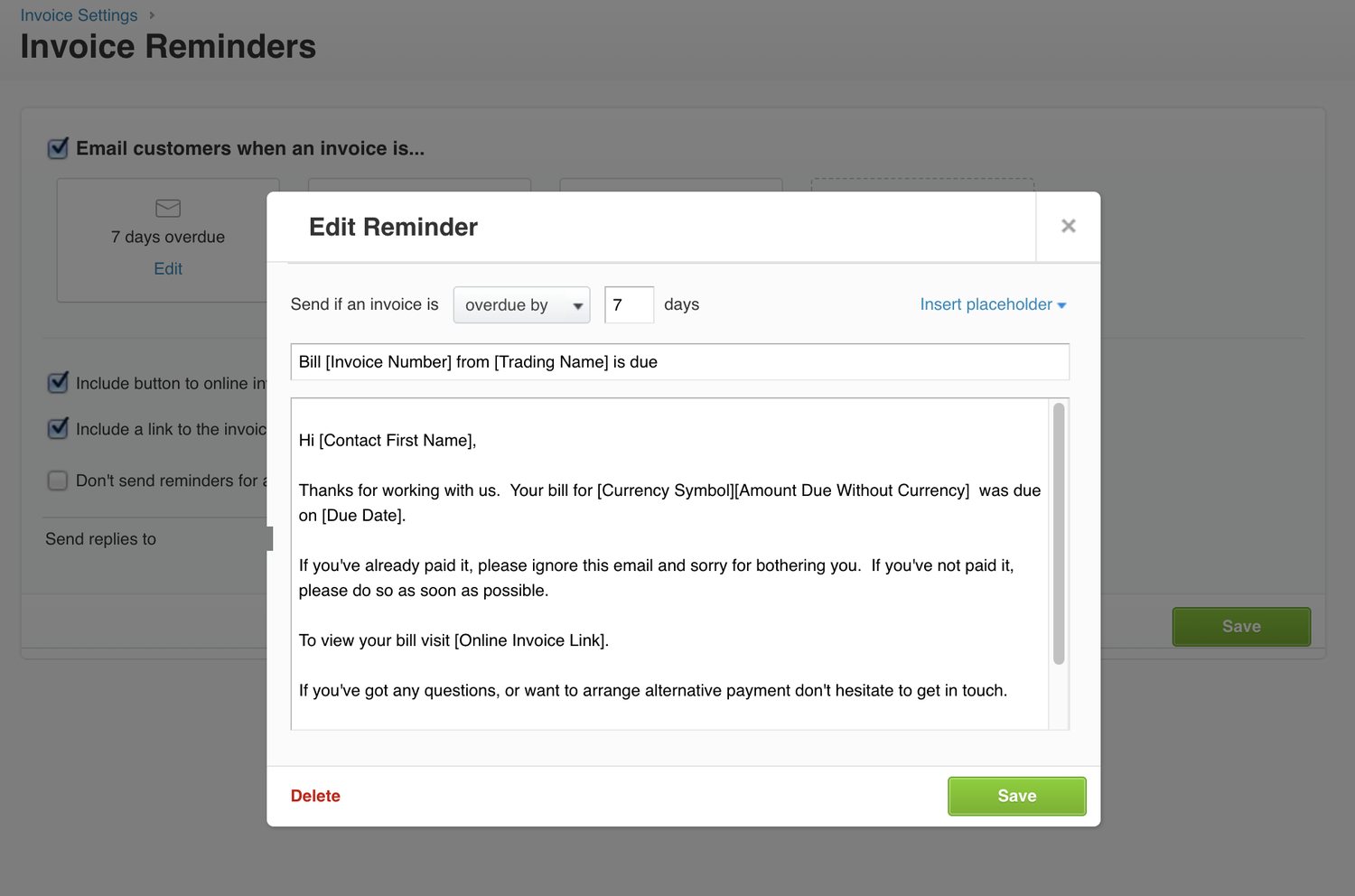
Invoice reminder setup in Xero, with a reminder scheduled for seven days overdue and an editable message template using placeholders for the contact name, invoice number and trading name.
Screenshot: invoice reminder setup in Xero, shown on a demo organisation with the reply address masked. Two details make this your communication rather than ours: the message goes out under your own trading name, and replies come back to your address. Worth reading the stock wording before you switch it on, though. It apologises for asking to be paid, which is not the tone most businesses want going to a customer a week past due. This is Xero software, not a Logiframe product. Xero is a trademark of Xero Limited.

The point of all this

Three Questions You Should Be Able to Answer on Any Given Day

Not at month end. On a Wednesday, in a minute, without calling anyone.

  • How much cash do I have, and how much of it is already spoken for? The bank balance is not the answer. The answer is the balance minus the bills already approved and the tax you are holding on someone else’s behalf.
  • Who owes me, and how late are they? Not a total. A list, oldest first, with the ones that have gone quiet visible at a glance.
  • Where did the money actually go last month? Compared against the month before, so the line that moved stands out without you hunting for it.

If your books cannot answer those three in about a minute, they are being kept for the tax return rather than for you. That is the difference between compliance bookkeeping and bookkeeping you can run a business on, and it costs about the same.

Starting from behind

If You Are Behind, You Are in Normal Company

Most of the businesses that come to us are not up to date. Some are a few months out, some have not reconciled since a software change two years ago, and a few arrive with a deadline already on top of them.

It is a fixable problem and it is a separate job from the ongoing work, so we quote it separately. We look at the file first, tell you what state it is actually in, and give you a number for bringing it current before anything monthly starts. No surprises halfway through, and no pretending a two year clean-up is a light month.

The 32-point health check is usually the cheapest way to find out where you stand, and you can take the result to anyone.

Honest sizing

When You Are Past This Page

Small and medium are not headcount bands. The line is structural, and there are two signs you have crossed it.

  • More than one person can commit the company to money. The moment someone other than you can order, subscribe or sign, you need approvals and some separation of duties. That is a different set of controls, not a bigger version of this one.
  • Someone outside the business reads your numbers. A lender, a board, an investor, an acquirer. When the close has a deadline that is not yours to move, the whole month has to be built to hit it.

If either is true, or you are running more than one entity, the work you need is on the growing and multi-entity businesses page. Same firm, more structure, priced differently. We would rather point you there now than sell you the wrong thing and have the mismatch surface in a year.

Questions

The Ones Owners Actually Ask

Do I have to change accounting software?
Usually not. Xero is where our depth is, and most of what we publish is about it, but we work in QuickBooks Online as well and we will pick up your existing file either way. If a change genuinely would help we will make the case and be specific about what it costs and what has to be rebuilt, rather than moving you for our convenience. A firm that only works in one platform has an obvious reason to recommend moving to it.
What do you need from me every month?
Less than you would expect. Access to the file and the bank feeds, supplier bills reaching a single inbox, and answers to a short list of questions about anything we cannot code with confidence. The questions are the part that matters, and there are fewer of them each month as we learn how you operate.
Do you run payroll?
No. Payroll runs in a payroll system, and we work alongside whichever one you use. The payroll journal reaches your ledger and we reconcile it, so wages, taxes and liabilities agree with what actually left the bank.
Do you file my taxes?
No. We do not prepare or file tax returns. We keep the books your preparer works from and answer their questions directly, which is usually the point at which their bill gets smaller and their questions stop landing in your inbox.
Will you chase my customers for payment?
Not in the sense of calling them. We set up the invoice reminder sequence so it runs automatically, sent under your business name, on the timing you choose, and we make sure your receivables list is accurate enough that the reminders are never embarrassing. The relationship with your customers stays yours.
How long does handing over take?
If the file is current, a couple of weeks to get access, learn how you code things and run a first close alongside you. If the file is behind, the catch-up comes first and the timeline depends on how far back it goes. We give you the number before we start, not during.

Get your evenings back without losing sight of the money

Tell us what you run, what software you are on, and how far behind the books are. We will tell you what it takes to get them current and what it costs to keep them that way.

Hand it over See pricing