
Who we serve

The day a second person can spend money, your books need controls they never needed before.

Nothing announces the transition. The same file, the same bookkeeper, the same monthly routine, and then one month the numbers are late because three people are waiting on each other, an intercompany balance has been growing since spring, and a lender wants statements by the fifteenth.

The transition

Three Things Change, and None of Them Are Size

Medium is not a headcount band. It is a set of structural facts, and any one of them changes what the accounting has to do.

  • More than one person can commit the company to money. Once someone other than the owner can order, subscribe or sign, the question stops being whether the books are accurate and becomes whether anyone would notice if they were not.
  • There is more than one entity, or more than one location. Intercompany balances appear, shared costs need allocating, and a combined view has to be produced from books that must stay separate.
  • Someone outside the business reads the numbers. A lender, a board, an investor, an acquirer. The close now has a date that is not yours to move, and a month that runs long is a conversation rather than an inconvenience.

Most companies cross all three within about eighteen months of each other, which is why the transition feels sudden even though it is not. The bookkeeping that got you here is not wrong. It is built for a business where one person saw every transaction, and that is no longer the business you are running.

Control

Separation of Duties in a Company Too Small for a Finance Department

The textbook answer assumes a team you do not have. The workable answer is narrower: three things should not all sit with the same person.

One

Set up the payee

Creating a supplier and its bank details. The step everyone forgets is a control, and the one that matters most.

Two

Approve the spend

Agreeing that the company owes it, against a limit that is written down rather than understood.

Three

Release the payment

Moving the money. Always someone with authority inside your business, and never your bookkeeper.

Three people is comfortable. Two is workable if the pairing is chosen deliberately, usually by splitting payee setup away from payment release. One person doing all three is the arrangement behind most small company losses, and it is almost never the result of anyone deciding it should work that way. It is what happens when a business grows and nobody revisits who has which permission.

Mechanically this is user roles in the accounting file, an approval tool where the volume justifies one, and a documented limit at which something needs a second signature. None of it is expensive. It is mostly a matter of someone deciding, writing it down, and then checking once a year that the file still matches the decision.
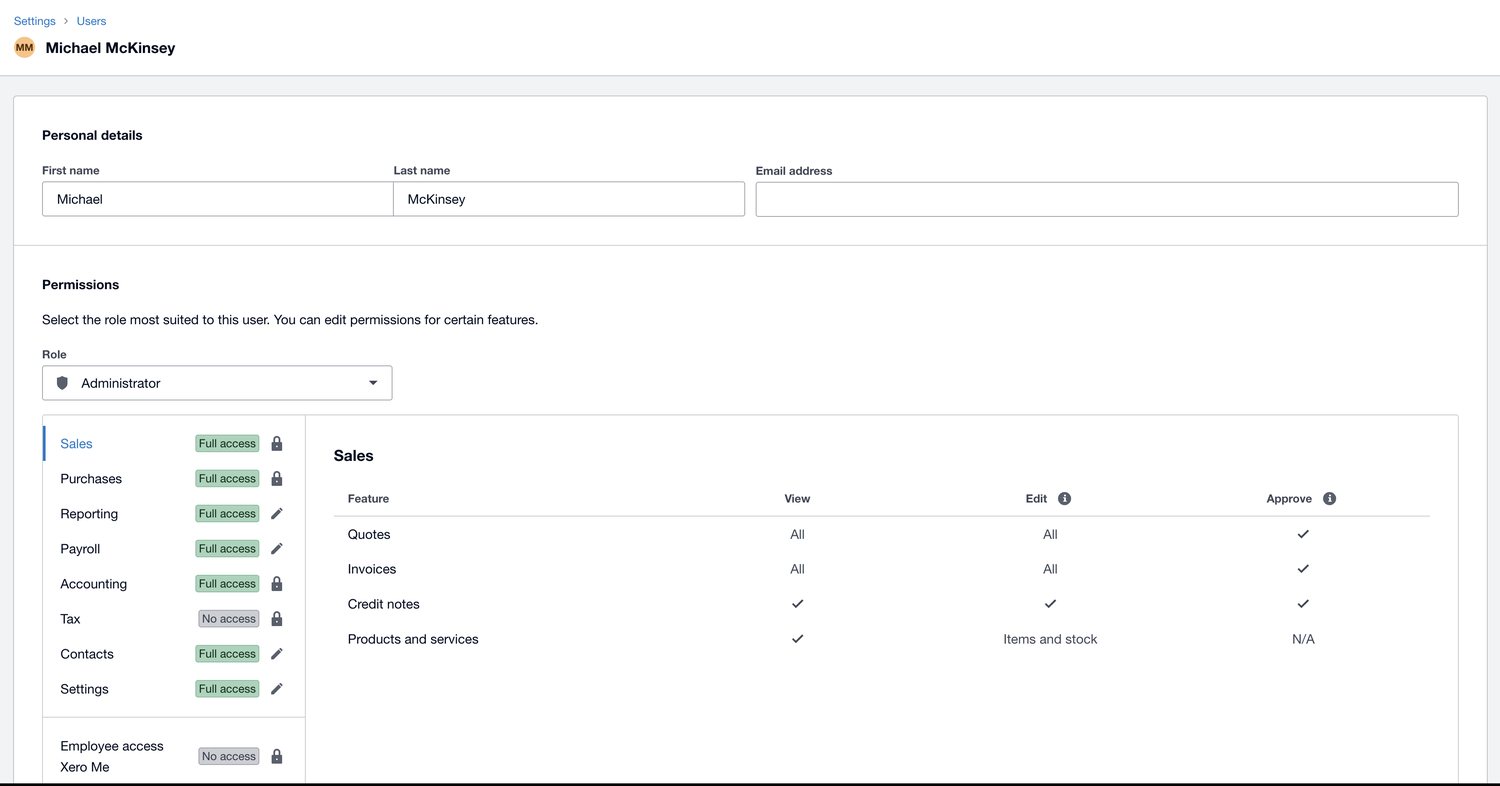
A single user's permissions in Xero, set to the Administrator role, with full access listed against sales, purchases, reporting, payroll, accounting, contacts and settings.
Screenshot: one user’s permissions in Xero, shown on a demo organisation with identifying details masked. The left column is the argument. Sales, purchases, accounting, contacts and settings all at full access means the same person can add a supplier, raise and approve a bill against it, and change the settings that govern both. Xero will let you narrow this area by area. Most files never do, because the role was assigned when the company was small enough that it did not matter. This is Xero software, not a Logiframe product. Xero is a trademark of Xero Limited.

Structure

More Than One Entity

The shortcut is to run several entities inside one accounting file, separated by a tracking category. It works for a while, and it fails in a way that is expensive to unwind.

Separate legal entities need separate books. They file separately, they can be sold or audited separately, and a balance sheet that cannot be produced for one of them on its own is not a balance sheet. Tracking categories slice a profit and loss well. They do not give you an entity, because they do not give you separate equity, separate retained earnings, or an intercompany balance that has to agree with something.

Done properly, it comes down to four things:

  • A chart of accounts that is the same in every entity. Same codes, same names, same structure. Consolidation is arithmetic when the accounts line up and a manual exercise when they do not.
  • Intercompany that clears. Every transaction recorded on both sides in the same period, and the balances agreed monthly rather than at year end. An intercompany account that only grows is an unreconciled difference wearing a respectable name.
  • Shared costs allocated on a stated basis. Written down, applied consistently, and revisited when the basis stops reflecting reality. Whoever asks about it later will ask how, not how much.
  • Consolidation above the ledger, not inside it. A reporting layer that combines the entities and eliminates the intercompany, leaving each set of books intact underneath.

Cadence

A Close With a Deadline That Is Not Yours

When someone outside the business is waiting, the close stops being an activity and becomes a schedule. The difference between a company that hits the fifteenth and one that does not is almost never effort. It is whether the work was arranged backwards from the date.

What that arrangement looks like: a written close calendar with each task owned by a named person and due on a named day. A cut-off that people actually observe, so that late invoices land in the right period rather than in the argument. Reconciliations done weekly so the close is a review rather than a rescue. Lock dates applied the moment the period is signed off, so nothing moves under a number somebody already read. And commentary on the variances that matter, written by someone who understands what the business did that month.

The reporting pack that comes out the other end is not a pile of statements. It is a small set of things a lender or a board can read without translation, delivered on the same date every month, with last month’s questions already answered in it.
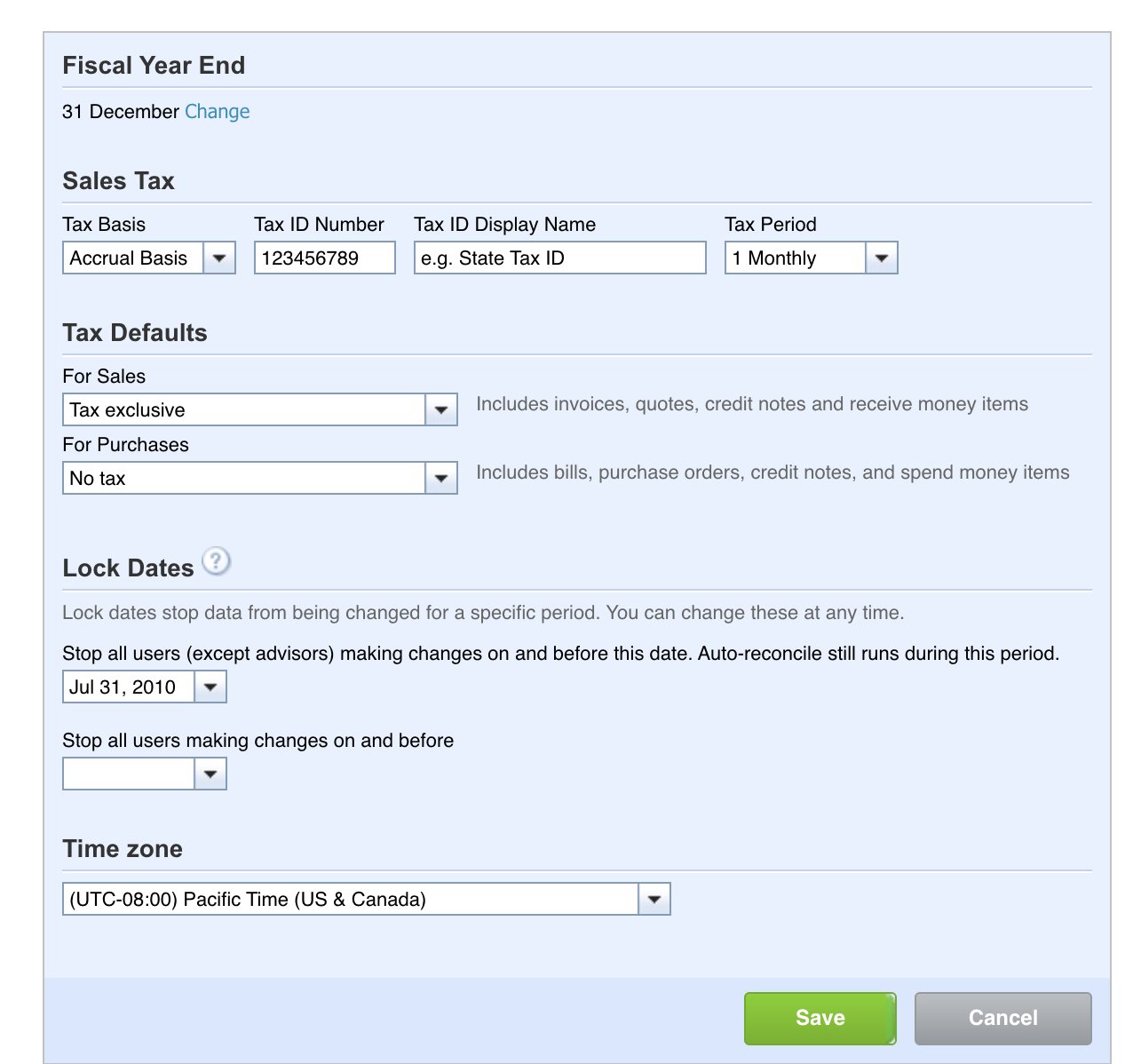
Xero financial settings, showing two lock date fields: one stopping all users except advisors, set to a date several years in the past, and one stopping all users, left empty.
Screenshot: lock dates in Xero, shown with demo data. There are two levels here and both are worth understanding. The first stops everyone except advisors, so your accountant can still post adjustments. The second stops everyone, including them. In this file the second is empty and the first is set to a date from years ago, which means the period is not actually locked at all. A stale lock date is worse than none, because everybody assumes the control is working. This is Xero software, not a Logiframe product. Xero is a trademark of Xero Limited.

Honest sizing

When the Ledger Runs Out

Businesses at this stage often arrive asking whether they have outgrown their accounting platform. Usually they have not. What they have outgrown is a file that was designed for a simpler company and never redesigned.

Worth separating the two, because the second one is much cheaper to fix. Before concluding the platform is the problem, look at whether the chart of accounts still matches how the business is organised, whether tracking is applied at the source document or added afterwards, whether approvals live in the system or in an email thread, and whether the integrations posting into the ledger reconcile. Most files described to us as broken are files that were never redesigned after the business changed shape.

That said, there are signals that are genuinely structural rather than cosmetic:

  • Consolidation is rebuilt in a spreadsheet every month, and the spreadsheet is now the real reporting system.
  • The entity count is still rising, and each addition costs the same effort as the last one.
  • You need permissions the platform cannot express, such as approval limits by department or by amount.
  • Operational detail that should live elsewhere has been forced into the ledger, and the close depends on unpicking it.
  • Transaction volume means integrations are permanently behind rather than occasionally late.

When several of those are true at once, the answer is a system built for it rather than a heavily extended general ledger. We do that work as well, so we have an interest in the answer, which is exactly why we would rather show you the redesign option first and let you decide. A migration you did not need is the most expensive thing on this page.

Questions

Questions at This Stage

We run three entities in one file, separated by tracking. Is that a real problem?
Yes, and it gets worse rather than better. Tracking slices a profit and loss but does not give you separate equity, separate retained earnings or an intercompany balance that has to agree. The longer it runs the more history has to be untangled when you separate them, which is usually forced by an event with a deadline attached, such as a sale, a loan or an audit.
We only have two people in finance. What should we split?
Separate the person who can create or change a supplier and its bank details from the person who releases payments. That single split closes the most common path to loss. Approval of the spend can sit with either, provided the limit above which a second person has to agree is written down rather than assumed.
Can you produce consolidated statements?
Yes, through a reporting layer that combines the entities and eliminates intercompany, with each entity’s books left intact underneath. To be clear about what that is and is not: these are management consolidations for you and your lenders or board. They are not audited financial statements, and we do not express an opinion on them.
Do we need to move to an ERP?
Probably not yet. Most companies that ask have a design problem rather than a platform problem, and a redesign costs a fraction of a migration. The section above lists the signals that are genuinely structural. If several apply to you at once then it is worth a real conversation, and we will tell you which category you are in before you have spent anything.
Can you work alongside our CPA and our auditor?
That is the normal arrangement. We keep the books and prepare the schedules and reconciliations they ask for, and we answer their questions directly instead of routing them through you. We do not prepare or file tax returns, and we do not audit.
Do we have to change accounting software to work with you?
No. Xero is where our depth is and most of what we publish is about it, but we work in QuickBooks Online as well. At this size the more useful question is not which platform but whether your file is designed for the company you are now, and that answer is usually the same either way.

Find out whether it is the design or the platform

Tell us how many entities you run, who can commit money, and who is waiting on your numbers each month. We will tell you what your file can still do and what it cannot.

Book a free 30-minute call See the 32-point check