17 min read
Internal Control in Mining Contractors
Preventing Fraud Without Slowing Operations For coal mining contractors, internal control is often discussed in uncomfortable terms. It is seen as a...
Logiframe is an Equal Opportunity Employer.
All qualified applicants will receive consideration for employment without regard to race, color, age, religion, sex, sexual orientation, gender identity / expression, national origin, protected veteran status, or any other characteristic protected under federal, state or local law, where applicable, and those with criminal histories will be considered in a manner consistent with applicable state and local laws.
Managed Services
Streamline your finance, tax, and payroll with reliable managed services built for scale.
NetSuite
Unlock enterprise-grade ERP to automate operations, gain insights, and scale your business smarter.
Xero
Empower your growing business with easy, cloud-based accounting and powerful Xero add-ons.
HubSpot
Turn your website, marketing, and CRM into one powerful growth engine with HubSpot solutions built for scale.
Featured Blog
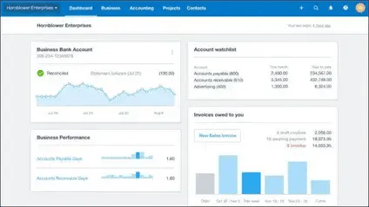
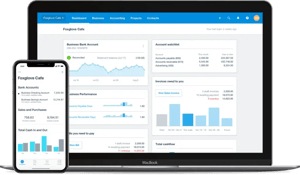
Software akuntansi Xero sudah menggunakan sistem cloud computing yang artinya Anda tidak perlu menginstalnya lagi di PC (Personal Computer). Anda dapat mengakses laporan keuangan perusahaan atau cash flow secara real time asalkan terhubung dengan internet.

By Industries
By Functions
Featured Blog

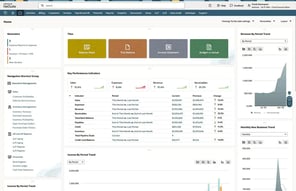
Dashbor NetSuite adalah salah satu bagian terpenting NetSuite. Memiliki dasbord yang terkonfigurasi dengan benar sangat penting bagi setiap karyawan untuk dapat dengan cepat menavigasi ke data yang mereka perlukan untuk melihat dan mengawasi tren penting.

By Functions
Discover accounting and technology solutions
designed to streamline operations, boost efficiency,
and empower growth for your small business.

Xero Accounting Software
Xero is a cloud-based accounting software that simplifies
invoicing, bank reconciliation, payroll, and expense tracking,
helping businesses manage finances efficiently and in real-time.
Featured Blog

In a remarkable achievement, Xero has been named one of the World’s Top 250 Fintech Companies for 2024 by CNBC. This recognition underscores Xero’s unwavering commitment to innovation, technology, and providing world-class cloud accounting solutions for businesses worldwide.
-1.webp?width=287&height=191&name=Xero%20Recognized%20Among%20the%20Worlds%20Top%20250%20Fintech%20Companies%20in%202024%20(feature%20blog)-1.webp)
Learn about our people, values, and more
About Us Overview →
Our Commitment
Featured Blog
The award underscores Logiframe's position as a trusted partner in leveraging NetSuite solution to drive business success and operational efficiency. This achievement reflects Logiframe's dedication to staying at the forefront of technology and providing outstanding solutions in the dynamic landscape of ERP.
.webp?width=409&height=289&name=Untitled%20design%20(11).webp)
Knowledge
Comparison
Event
Featured Blog
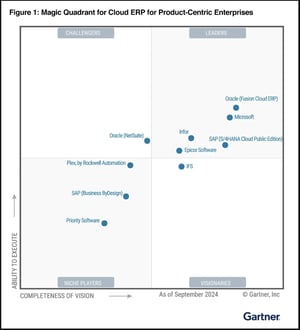
In Cloud ERP for Wholesale and Distribution, NetSuite is the strong Challenger in Gartner's Magic Quadrant for Product-Centric Enterprises. Yes, large ERP vendors dominate the market with Oracle Fusion Cloud ERP, SAP S/4HANA Cloud, and Microsoft Dynamics 365, but NetSuite provides the ideal solution to mid-market wholesale and distribution businesses by delivering robust functionality without excessive costs or complexity.

5 min read
Wienanto Tanuwidjaja
:
Jan 16, 2026 6:02:13 PM
For coal mining contractors, contract renegotiation is one of the most critical moments in the life of a project. It is also one of the most misunderstood.
Many contractors approach renegotiation reactively. Discussions begin only when margins are already under pressure, costs have drifted, or mine owners signal dissatisfaction. At that point, negotiations become defensive. Contractors argue that costs have increased, conditions have changed, or assumptions are no longer valid. Mine owners respond by questioning efficiency, productivity, or benchmarking against competitors.
The outcome is often predictable: margin compression, strained relationships, or, in the worst cases, contract termination.
The best mining contractors approach renegotiation very differently. They treat it not as an event, but as a process that begins on day one of the contract. They prepare continuously, using data to understand their own economics better than anyone else in the room. When negotiations arrive, they do not plead for relief. They present facts.
This article explores how leading mining contractors prepare for contract renegotiation, how they use cost and productivity data to defend margins, why benchmarking matters more than storytelling, and how integrated ERP systems such as NetSuite enable fact-based negotiations grounded in operational reality.
Table of Contents:
1. Why Contract Renegotiation Is Inevitable
2. The Weak Position: Renegotiating from Financial Stress
3. The Strong Position: Renegotiating from Operational Clarity
4. Using Cost Data to Defend Margins
5. Productivity Benchmarking as a Negotiation Tool
6. Fact-Based Conversations Replace Narrative Disputes
7. Why Historical Cost Analysis Matters
8. Profitability Per Contract, Not Per Company
9. What-If Scenarios: Turning Negotiation into Joint Problem-Solving
10. Organizational Discipline Behind the Data
11. Final Thoughts
In mining, long-term contracts are negotiated under uncertainty.
Initial assumptions are based on:
Over time, reality diverges from plan. Geology varies, pits deepen, haul distances increase, weather patterns change, and input costs fluctuate. No contract remains perfectly aligned with its original assumptions.
Renegotiation is not a failure. It is a natural consequence of operating in a complex, dynamic environment.
The question is not whether renegotiation will occur, but who will control the narrative when it does.
Contractors that delay preparation usually enter renegotiation from a position of weakness.
Common symptoms include:
In these situations, discussions focus on:
While these explanations may be valid, they are rarely sufficient. Mine owners hear similar arguments from every contractor. Without precise, contract-specific evidence, requests for rate adjustments are perceived as inefficiency or poor management.
Leading contractors enter renegotiation from a fundamentally different position.
They know:
Most importantly, they can separate uncontrollable changes from operational performance.
This clarity changes the tone of negotiations. Discussions become analytical rather than emotional. The focus shifts from blame to economics.
At the heart of successful renegotiation is credible cost data.
The best contractors do not present aggregated cost increases. They present decomposed cost drivers.
For example:
This level of detail demonstrates professionalism and builds trust. It shows the mine owner that the contractor understands its own business and is not using renegotiation to mask inefficiency.
Benchmarking is one of the most powerful, and often underused, negotiation tools.
Leading contractors benchmark productivity at multiple levels:
This data allows contractors to demonstrate:
When contractors can show that productivity has been maintained or improved while costs have increased due to external factors, the basis for renegotiation becomes much stronger.
Poorly prepared renegotiations rely on narrative:
Well-prepared renegotiations rely on evidence:
This shift fundamentally changes the discussion. It reduces subjectivity and increases the likelihood of constructive outcomes.
Also Read: NetSuite Multi-Entity Consolidation | Streamline Group Operations
Effective renegotiation depends on understanding trends, not just current conditions.
Historical cost analysis allows contractors to:
Mine owners are more receptive to renegotiation when contractors can show:
This requires reliable historical data that is consistent, comparable, and trusted.
One of the most common mistakes contractors make is presenting company-wide financial pressure during renegotiation.
Mine owners are concerned with their contract, not the contractor’s overall performance.
Leading contractors analyze profitability at contract level:
This allows discussions to remain focused and relevant. It also avoids the perception that one client is being asked to subsidize inefficiencies elsewhere.
The most sophisticated contractors go one step further. They use data to explore scenarios collaboratively.
Rather than simply requesting higher rates, they present alternatives:
What-if analysis transforms renegotiation from a zero-sum discussion into a joint optimization exercise. It positions the contractor as a partner rather than an adversary.
Preparing for renegotiation requires more than good intentions. It requires systems that capture, structure, and analyze data continuously.
NetSuite enables renegotiation readiness in several critical ways.
Historical Cost Analysis by Contract
NetSuite allows costs to be tracked by contract, pit, and activity over time. This creates a reliable historical record that supports trend analysis and root-cause investigation.
Because data is captured consistently, historical comparisons are credible and defensible.
Profitability Visibility at Contract Level
With project and contract-based accounting, NetSuite provides real-time visibility into:
Contractors do not need to reconstruct profitability at renegotiation time. The data already exists.
Integrated What-If Analysis
By combining cost data, productivity metrics, and pricing assumptions, NetSuite supports scenario modeling.
Contractors can evaluate:
This allows negotiations to be grounded in quantified trade-offs rather than abstract arguments.
Credibility Through Consistency
Perhaps most importantly, NetSuite provides a single source of truth.
When the same data is used internally for management, externally for negotiation, and formally for financial reporting, credibility increases. Mine owners recognize when contractors are working from disciplined systems rather than ad hoc models.
Also Read: Robert Bosch Retail Indonesia: Optimizing eCommerce with NetSuite
Data alone is not enough. Leading contractors pair systems with discipline.
They:
Renegotiation becomes a continuation of an ongoing conversation, not a sudden confrontation.
Contract renegotiation is not about arguing harder. It is about preparing better.
The best mining contractors do not wait for margins to collapse before engaging. They use data to understand their economics continuously, benchmark productivity honestly, and separate controllable performance from uncontrollable change.
When renegotiation arrives, they speak with clarity and credibility. Discussions focus on facts, not frustration. Outcomes are more balanced, relationships are preserved, and margins are defended.
Integrated platforms such as NetSuite play a central role in this approach by turning operational activity into structured financial insight. They enable contractors to move from reactive renegotiation to proactive partnership.
In volatile operating environments, preparation is the strongest negotiating position of all.
17 min read
Preventing Fraud Without Slowing Operations For coal mining contractors, internal control is often discussed in uncomfortable terms. It is seen as a...
15 min read
In the coal industry, headlines are dominated by coal prices. When prices surge, optimism follows. When prices fall, budgets tighten and projects are...
15 min read
And How Real-Time Visibility Changes Decisions Before Margins Are Lost In coal mining contractor businesses, financial reports are treated as a...