Skip to the main content.

logiframe

Privacy policy

Logiframe is an Equal Opportunity Employer.

All qualified applicants will receive consideration for employment without regard to race, color, age, religion, sex, sexual orientation, gender identity / expression, national origin, protected veteran status, or any other characteristic protected under federal, state or local law, where applicable, and those with criminal histories will be considered in a manner consistent with applicable state and local laws.

Managed Services
Streamline your finance, tax, and payroll with reliable managed services built for scale.

NetSuite
Unlock enterprise-grade ERP to automate operations, gain insights, and scale your business smarter.

Xero
Empower your growing business with easy, cloud-based accounting and powerful Xero add-ons.

Our journey is defined by a steadfast commitment to excellence and an unwavering dedication to our clients. Since our establishment, we take immense pride in having served over 600 clients across diverse industries.


Featured Blog

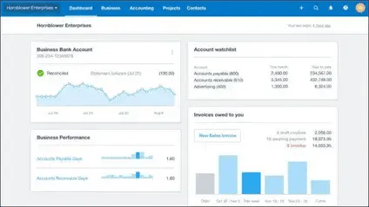
Xero, Accounting Software Terbaik untuk Bisnis Anda

Software akuntansi Xero sudah menggunakan sistem cloud computing yang artinya Anda tidak perlu menginstalnya lagi di PC (Personal Computer). Anda dapat mengakses laporan keuangan perusahaan atau cash flow secara real time asalkan terhubung dengan internet.

Xero Dashboard-1

Discover more


Featured Blog

Logo Oracle NetSuite_500_200

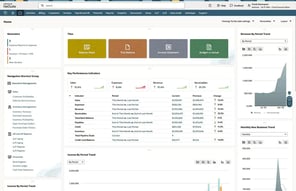
Introduction to NetSuite Dashboard

Dashbor NetSuite adalah salah satu bagian terpenting NetSuite. Memiliki dasbord yang terkonfigurasi dengan benar sangat penting bagi setiap karyawan untuk dapat dengan cepat menavigasi ke data yang mereka perlukan untuk melihat dan mengawasi tren penting.

NetSuite Dashboard

Discover more

Explore NetSuite

Simplifying Success for Small Businesses

Discover accounting and technology solutions
designed to streamline operations, boost efficiency,
and empower growth for your small business.

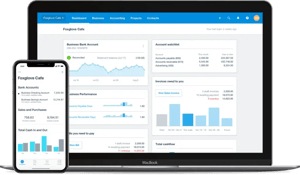
Dekstop and mobile version of Xero

Xero Accounting Software

The Accounting Software for Everyday
Business for Everyone

Xero is a cloud-based accounting software that simplifies
invoicing, bank reconciliation, payroll, and expense tracking,
helping businesses manage finances efficiently and in real-time.

Explore Xero

Featured Blog

Logo testi

Xero Recognized Among the World's Top 250 Fintech Companies in 2024

In a remarkable achievement, Xero has been named one of the World’s Top 250 Fintech Companies for 2024 by CNBC. This recognition underscores Xero’s unwavering commitment to innovation, technology, and providing world-class cloud accounting solutions for businesses worldwide.

Xero Recognized Among the Worlds Top 250 Fintech Companies in 2024 (feature blog)-1

Discover more

Learn about our people, values, and more

About Us Overview →

Our Commitment

Featured Blog

Oracle NetSuite 2023 Award

The award underscores Logiframe's position as a trusted partner in leveraging NetSuite solution to drive business success and operational efficiency. This achievement reflects Logiframe's dedication to staying at the forefront of technology and providing outstanding solutions in the dynamic landscape of ERP.

Untitled design (11)

Discover more

Featured Blog

Why NetSuite Is the Best ERP for Wholesale Businesses Making $20M-$80M

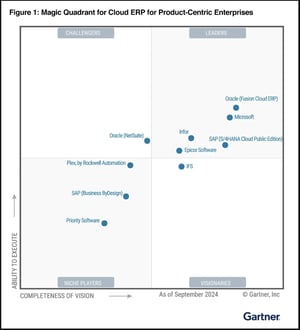
In Cloud ERP for Wholesale and Distribution, NetSuite is the strong Challenger in Gartner's Magic Quadrant for Product-Centric Enterprises. Yes, large ERP vendors dominate the market with Oracle Fusion Cloud ERP, SAP S/4HANA Cloud, and Microsoft Dynamics 365, but NetSuite provides the ideal solution to mid-market wholesale and distribution businesses by delivering robust functionality without excessive costs or complexity.

Magic Quadrant for Cloud ERP for Product-Centric Enterprises

Discover more

5 min read

From BCM to EBITDA

From BCM to EBITDA

Turning Mining Production Data into Financial Insight

In coal mining contractor businesses, vast amounts of data are generated every day. Bank cubic meters moved, truck hours logged, fuel consumed, shifts completed, and equipment availability tracked with operational precision. Yet despite this abundance of information, many contractors still struggle to answer the most fundamental management question:

Are we actually making money on this contract right now?

The paradox is striking. Production teams are often highly disciplined in measuring output, while finance teams work diligently to close the books each month. Still, profitability is frequently understood only in hindsight, after invoices are issued, costs are reconciled, and cash has already left the business.

This article explores why the disconnect between operations and finance persists in coal mining contractors, why reported profits often lag operational reality, how month-end chaos becomes normalized, and how disciplined contractors use integrated ERP systems to connect production metrics such as BCM directly to EBITDA.

Table of Contents:

1. The Structural Disconnect Between Operations and Finance
2. Why Reported Profits Lag Reality
3. Month-End Chaos as a Symptom, Not a Cause
4. Why BCM Must Be Linked Directly to EBITDA
5. The Limits of Spreadsheets and Manual Models
6
. Integrated ERP as the Missing Link
7. Project Accounting: Turning Sites and Pits into Economic Units
8
. Real-Time Cost per BCM Visibility
9. Operational KPIs Tied Directly to the P&L
10. Faster Close, Better Decisions
11. Strategic Benefits Beyond Reporting
12. Final Thoughts

The Structural Disconnect Between Operations and Finance

Coal mining contractors operate in one of the most operationally intensive environments of any industry. Sites run twenty-four hours a day. Decisions are made hourly, sometimes minute by minute, based on pit conditions, weather, equipment availability, and safety considerations.

Production teams speak the language of:

  • BCM moved per shift
  • Equipment hours and availability
  • Truck and excavator productivity
  • Haul distance and cycle time

Finance teams, by contrast, speak the language of:

  • Cost categories
  • Accruals and provisions
  • Monthly profit and loss statements
  • Cash flow and working capital

Both perspectives are valid. The problem is that they rarely meet in real time.

Production teams may achieve or exceed volume targets while finance later reports declining margins. Finance may identify cost overruns at month-end without clear visibility into which operational decisions caused them. Each side sees part of the picture, but neither sees the full economic reality as it unfolds.

Why Reported Profits Lag Reality

In many mining contractor organizations, profitability is effectively a historical artifact. It is something confirmed after the fact, not managed proactively.

There are several structural reasons for this.

Production Data Is Operational, Not Financial

BCM figures, equipment hours, and utilization rates are usually captured in operational systems or spreadsheets designed for site management. These systems are excellent at tracking volume and activity, but they rarely translate data into financial terms.
A production report may show that a pit moved 500,000 BCM in a month, but it does not automatically reveal:

  • The true cost per BCM
  • How fuel inefficiency affected margins
  • Whether idle time inflated unit costs
  • How maintenance behavior impacted profitability

Without financial context, production success can mask economic underperformance.

Also Read:
NetSuite for Mining Operations

Financial Data Is Aggregated and Delayed

Finance teams typically receive cost data after it has already been incurred. Fuel invoices, spare parts usage, contractor labor, and maintenance expenses are processed through accounting systems on a periodic basis.

By the time costs are allocated and reviewed:

  • The operational decisions that caused them are weeks old
  • The site has moved on to new pits or sequences
  • Corrective action is no longer possible

As a result, financial reporting confirms outcomes rather than influencing them.

Accruals and Estimates Blur the Picture

Mining contractor financial statements often rely heavily on accruals and estimates. Fuel consumption may be accrued based on expected usage. Maintenance costs may be smoothed over time. Production bonuses or penalties may be estimated before final reconciliation.

While accrual accounting is necessary, it also creates distance between reported profit and operational reality. Management may see a stable margin on paper while underlying cost per BCM is quietly deteriorating.

Month-End Chaos as a Symptom, Not a Cause

In many contractor organizations, month-end close is an exhausting and stressful exercise. Finance teams chase site data, reconcile production numbers with invoices, adjust accruals, and respond to management questions under tight deadlines.

This chaos is often treated as inevitable. In reality, it is a symptom of deeper structural issues.

Month-end becomes chaotic because:

  • Production and finance data are not integrated
  • Cost allocation is manual and retrospective
  • Variance analysis is performed after decisions are locked in

When month-end is the first time operations and finance truly meet, insight arrives too late to matter.

Why BCM Must Be Linked Directly to EBITDA

For coal mining contractors, BCM is not just a volume metric. It is the fundamental economic unit of the business.
Every BCM moved consumes:

  • Fuel
  • Equipment time
  • Labor
  • Maintenance capacity
  • Working capital

Every BCM also generates revenue at a predefined contract rate. The difference between revenue per BCM and cost per BCM determines margin, cash flow, and ultimately EBITDA.

If management cannot see EBITDA implications at the BCM level, they are effectively managing blind.

Also Read: NetSuite Multi-Entity Consolidation | Streamline Group Operations

The Limits of Spreadsheets and Manual Models

Many contractors attempt to bridge the operations-finance gap using spreadsheets. Cost models are built to estimate cost per BCM. Variance analyses are performed periodically. Management presentations reconcile operational KPIs with financial outcomes.

These efforts are well intentioned, but they have inherent limitations:

  • They are time-consuming to maintain
  • They rely on manual data extraction
  • They are prone to error and inconsistency
  • They are not real time

Most importantly, they do not scale. As operations grow in size or complexity, spreadsheet-based integration breaks down.

Integrated ERP as the Missing Link

To move from retrospective reporting to proactive management, mining contractors need a system that treats production data as financial data from the outset.

This is where an integrated ERP such as NetSuite becomes critical.

NetSuite does not replace operational systems such as fleet management or mine planning tools. Instead, it connects their outputs to the financial backbone of the organization, allowing BCM-level activity to flow directly into economic insight.

Project Accounting: Turning Sites and Pits into Economic Units

One of the most powerful concepts for mining contractors is treating each pit, contract, or mining block as a project.

With project accounting:

  • Planned BCMs and budgets are defined upfront
  • Actual BCMs and costs are captured continuously
  • Variances are visible as operations unfold

This approach allows management to see which pits or contracts are creating value and which are destroying it, not at month-end, but during the month when action is still possible.

Real-Time Cost per BCM Visibility

By integrating cost data with production metrics, NetSuite enables near real-time calculation of cost per BCM.

Fuel usage, labor, maintenance, spare parts, and depreciation are allocated systematically based on:

  • Equipment hours
  • Activity type
  • Project or pit

This allows management to answer critical questions quickly:

  • Is cost per BCM increasing this week, and why?
  • Which fleet is underperforming relative to plan?
  • How much idle time is translating into real cost?

Cost per BCM stops being an abstract average and becomes a live management metric.

Operational KPIs Tied Directly to the P&L

In many organizations, operational KPIs and financial KPIs live in separate dashboards. NetSuite enables them to be linked.
Examples include:

  • Equipment utilization linked to depreciation and maintenance cost
  • Fuel efficiency linked to cost of goods sold
  • Productivity per shift linked to gross margin per contract

When operational teams see the financial impact of their decisions, behavior changes. When finance teams understand the operational drivers behind variances, conversations become constructive rather than adversarial.

Faster Close, Better Decisions

An integrated system reduces the effort required to close the books. When data is captured and allocated continuously, month-end becomes a confirmation process rather than a forensic exercise.

This delivers two benefits:

  • Finance teams spend less time reconciling and more time analyzing
  • Management receives timely, credible insight

Decision-making shifts from reactive explanations to proactive control.

Also Read: Hike Together: NetSuite and Partners Giving Back to the Community

Strategic Benefits Beyond Reporting

Connecting BCM to EBITDA delivers benefits that extend beyond day-to-day management.

Contract bidding becomes more accurate because historical cost data is reliable and granular. Contract renegotiations are supported by facts rather than assumptions. Capital allocation decisions, such as fleet expansion or replacement, are grounded in true economic performance.

Most importantly, management gains confidence that profitability is understood as it is created, not reconstructed after the fact.

Final Thoughts

Coal mining contractors do not fail because they lack production data. They fail because they cannot consistently translate production data into financial insight.

BCM, equipment hours, and utilization metrics are powerful only when they are connected directly to cost, margin, and cash flow. Without that connection, reported profits will always lag reality, and month-end chaos will remain a permanent feature of the business.

By using integrated ERP platforms such as NetSuite to link operations and finance, contractors can move from hindsight to foresight, managing profitability at the level where it is truly created.


From BCM to EBITDA (2)

Can we help you to advance your business?


Contact us to discover your options.

The Business Model of Coal Mining Contractors

15 min read

The Business Model of Coal Mining Contractors

In the coal industry, headlines are dominated by coal prices. When prices surge, optimism follows. When prices fall, budgets tighten and projects are...

Fuel Is the Silent Killer

15 min read

Fuel Is the Silent Killer

Table of Contents: 1. How Mining Contractors Lose Millions Without Knowing It and How Discipline Restores Control2. Fuel Economics in Coal Mining...

Explore NetSuite's Role in Transforming Sales Forecasting for Success

8 min read

Explore NetSuite's Role in Transforming Sales Forecasting for Success

Sales forecasting is a critical process for business success, enabling organizations to make informed decisions and plan effectively. This article...