Skip to the main content.

logiframe

Privacy policy

Logiframe is an Equal Opportunity Employer.

All qualified applicants will receive consideration for employment without regard to race, color, age, religion, sex, sexual orientation, gender identity / expression, national origin, protected veteran status, or any other characteristic protected under federal, state or local law, where applicable, and those with criminal histories will be considered in a manner consistent with applicable state and local laws.

Managed Services
Streamline your finance, tax, and payroll with reliable managed services built for scale.

NetSuite
Unlock enterprise-grade ERP to automate operations, gain insights, and scale your business smarter.

Xero
Empower your growing business with easy, cloud-based accounting and powerful Xero add-ons.

Our journey is defined by a steadfast commitment to excellence and an unwavering dedication to our clients. Since our establishment, we take immense pride in having served over 600 clients across diverse industries.


Featured Blog

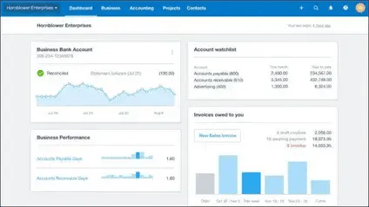
Xero, Accounting Software Terbaik untuk Bisnis Anda

Software akuntansi Xero sudah menggunakan sistem cloud computing yang artinya Anda tidak perlu menginstalnya lagi di PC (Personal Computer). Anda dapat mengakses laporan keuangan perusahaan atau cash flow secara real time asalkan terhubung dengan internet.

Xero Dashboard-1

Discover more


Featured Blog

Logo Oracle NetSuite_500_200

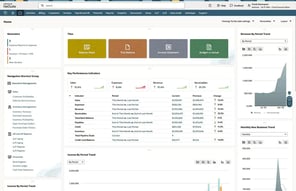
Introduction to NetSuite Dashboard

Dashbor NetSuite adalah salah satu bagian terpenting NetSuite. Memiliki dasbord yang terkonfigurasi dengan benar sangat penting bagi setiap karyawan untuk dapat dengan cepat menavigasi ke data yang mereka perlukan untuk melihat dan mengawasi tren penting.

NetSuite Dashboard

Discover more

Explore NetSuite

Simplifying Success for Small Businesses

Discover accounting and technology solutions
designed to streamline operations, boost efficiency,
and empower growth for your small business.

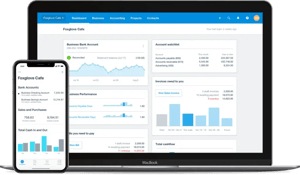
Dekstop and mobile version of Xero

Xero Accounting Software

The Accounting Software for Everyday
Business for Everyone

Xero is a cloud-based accounting software that simplifies
invoicing, bank reconciliation, payroll, and expense tracking,
helping businesses manage finances efficiently and in real-time.

Explore Xero

Featured Blog

Logo testi

Xero Recognized Among the World's Top 250 Fintech Companies in 2024

In a remarkable achievement, Xero has been named one of the World’s Top 250 Fintech Companies for 2024 by CNBC. This recognition underscores Xero’s unwavering commitment to innovation, technology, and providing world-class cloud accounting solutions for businesses worldwide.

Xero Recognized Among the Worlds Top 250 Fintech Companies in 2024 (feature blog)-1

Discover more

Learn about our people, values, and more

About Us Overview →

Our Commitment

Featured Blog

Oracle NetSuite 2023 Award

The award underscores Logiframe's position as a trusted partner in leveraging NetSuite solution to drive business success and operational efficiency. This achievement reflects Logiframe's dedication to staying at the forefront of technology and providing outstanding solutions in the dynamic landscape of ERP.

Untitled design (11)

Discover more

Featured Blog

Why NetSuite Is the Best ERP for Wholesale Businesses Making $20M-$80M

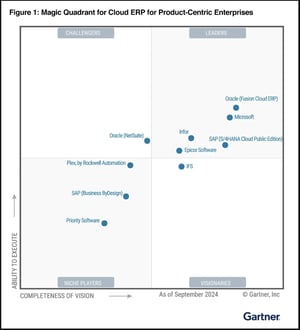
In Cloud ERP for Wholesale and Distribution, NetSuite is the strong Challenger in Gartner's Magic Quadrant for Product-Centric Enterprises. Yes, large ERP vendors dominate the market with Oracle Fusion Cloud ERP, SAP S/4HANA Cloud, and Microsoft Dynamics 365, but NetSuite provides the ideal solution to mid-market wholesale and distribution businesses by delivering robust functionality without excessive costs or complexity.

Magic Quadrant for Cloud ERP for Product-Centric Enterprises

Discover more

5 min read

Why Most Mining Contractor Financial Reports Are Already Too Late

Why Most Mining Contractor Financial Reports Are Already Too Late


And How Real-Time Visibility Changes Decisions Before Margins Are Lost

In coal mining contractor businesses, financial reports are treated as a critical management tool. Monthly profit and loss statements, cost summaries, and variance reports are prepared with significant effort and reviewed carefully by management. Yet despite this attention, many contractors continue to suffer margin erosion, cash flow pressure, and repeated “surprises” in their results.

The uncomfortable truth is this: by the time most financial reports are reviewed, the decisions that shaped those results are already weeks old.

In a business where operations run continuously, costs accumulate hourly, and margins are thin, delayed insight is not merely inconvenient. It is structurally dangerous.

This article examines why financial reporting in mining contractor organizations is often too late to be useful, how month-end delays and manual consolidation become normalized, why decisions are routinely made using outdated data, and how disciplined contractors use real-time visibility to shift from reactive explanation to proactive control.

Table of Contents:

1. The Time Sensitivity of Mining Contractor Economics
2. Month-End Close: A Ritual of Delay
3. Manual Consolidation and Fragmented Systems
4. Decision-Making with Outdated Data
5. Why “Fast Close” Alone Is Not Enough
6
. The Case for Real-Time Financial Visibility
7. How NetSuite Changes the Reporting Model
8. Behavioral Impact of Timely Information
9. Strategic Implications Beyond Monthly Reporting
10. Final Thoughts

The Time Sensitivity of Mining Contractor Economics

Coal mining contractors operate in an environment where economic outcomes are determined daily, not monthly.

Every shift consumes fuel, generates maintenance wear, produces BCMs, and commits working capital. Small deviations in productivity, utilization, or cost discipline compound rapidly at scale. A few inefficient weeks can eliminate an entire quarter’s margin.

Yet most contractors rely on monthly reporting cycles to understand profitability. This creates a fundamental mismatch between how value is created and how it is measured.

By the time management reviews a monthly P&L:

  • Thousands of operating hours have passed
  • Fleet deployment decisions are locked in
  • Operational behavior has already shifted to new pits or sequences

Financial insight arrives after the opportunity to influence outcomes has passed.

Month-End Close: A Ritual of Delay

In many mining contractor organizations, month-end close is a stressful and resource-intensive exercise.

Finance teams chase site data, reconcile production figures with invoices, adjust accruals, resolve discrepancies, and prepare management reports under tight deadlines. Operations teams are asked to clarify numbers from weeks earlier. Management waits for “final” results before drawing conclusions.

This process is often accepted as inevitable. In reality, it is a symptom of deeper structural issues.

Month-end close becomes slow and painful because:

  • Production data and financial data are captured in separate systems
  • Cost allocation relies on manual spreadsheets
  • Reconciliations are performed after the fact
  • Variance analysis is retrospective

When the close itself consumes most of the reporting cycle, insight is delayed by design.

Manual Consolidation and Fragmented Systems

Many mining contractors operate multiple sites, pits, or contracts simultaneously. Each site may use its own tools for tracking production, fuel, maintenance, and labor. Head office finance teams then consolidate this information manually.

This fragmentation creates several problems.

First, data consistency suffers. Definitions of productivity, cost categories, and timing vary across sites. Considerable effort is spent aligning numbers rather than analyzing them.
Second, consolidation introduces delay. Data must be extracted, reviewed, adjusted, and reworked before it is usable at group level.

Third, errors and judgment calls become embedded in the process. Management receives a “best available” view of performance rather than a precise one.

The result is reporting that is accurate enough to satisfy accounting requirements, but too slow and too aggregated to guide operations.

Also Read: Why NetSuite Is the Best ERP for Wholesale Businesses Making $20M-$80M

Decision-Making with Outdated Data

Because financial reports lag operational reality, management decisions are often made using incomplete or outdated information.

Common scenarios include:

  • Continuing with an inefficient fleet configuration because last month’s report looked acceptable
  • Delaying corrective action on cost overruns because variances are still being reconciled
  • Misinterpreting short-term improvement or deterioration due to timing differences

In fast-moving operations, even a two-week delay can materially distort decision-making. By the time a problem is confirmed financially, the cost has already been incurred.

This creates a cycle of reactive management:

  • Identify issues after they occur
  • Explain results rather than influence them
  • Accept volatility as unavoidable

Over time, this erodes confidence in reporting and encourages reliance on intuition rather than data.

Why “Fast Close” Alone Is Not Enough

Many organizations respond to reporting delays by focusing on faster month-end close. While speed matters, it is not sufficient on its own.

A faster close that still relies on:

  • Manual reconciliations
  • Aggregated cost views
  • Retrospective variance analysis

Simply delivers late insight slightly earlier.
What mining contractors need is not just faster reporting, but continuous visibility. Insight must be available while operations are still underway, not after they are complete.

The Case for Real-Time Financial Visibility

Real-time visibility does not mean eliminating accounting discipline or abandoning accrual principles. It means ensuring that operational activity is translated into financial insight as it occurs.

For mining contractors, this requires:

  • Integrating production, cost, and financial data
  • Allocating costs at the level where decisions are made
  • Making variances visible during the period, not after close

When this happens, financial reporting shifts from a historical record to a management tool.

Also Read: How ERP Became a Game-Changer for Wholesale & Distribution Businesses

How NetSuite Changes the Reporting Model
NetSuite enables a fundamentally different approach to financial visibility for mining contractors by acting as a single source of truth across sites and functions.
Rather than collecting data at month-end, NetSuite captures and allocates costs continuously as transactions occur.

Site-to-Head Office Visibility by Design

NetSuite’s multi-entity and project accounting structure allows each site, pit, or contract to be represented as a distinct reporting unit within a single system.

This means:

  • Site-level P&L is available at any time
  • Head office sees consistent data across all operations
  • Consolidation is automatic rather than manual

Management no longer waits for site submissions to understand performance.

Continuous Cost Allocation

Fuel, maintenance, labor, spare parts, and other operating costs are allocated systematically to:

  • Projects or pits
  • Equipment units or fleets
  • Cost categories relevant to operations

Because allocation happens continuously, cost per BCM and margin trends are visible during the month. Deviations do not wait until close to surface.

Real-Time Dashboards for Operational and Financial KPIs

NetSuite dashboards allow management to monitor:

  • Cost per BCM versus plan
  • Site-level profitability
  • Key cost drivers such as fuel and maintenance
  • Working capital and cash flow indicators

These dashboards are not static reports. They update as transactions are recorded, providing a living view of performance.

This enables earlier intervention. When a site’s cost trend deteriorates, management sees it in time to ask why and act.

Faster Close as a Byproduct, Not the Goal

When data is captured and reconciled continuously, month-end close becomes simpler by default.

Finance teams spend less time reconciling and more time analyzing. Adjustments are smaller because most issues have already been identified and addressed.

The close becomes a confirmation exercise rather than a discovery process.

Behavioral Impact of Timely Information

One of the most significant benefits of real-time reporting is behavioral.
When operations teams see the financial impact of their decisions while those decisions still matter, accountability improves naturally. When finance teams have access to operational context, discussions become constructive rather than defensive.

The organization shifts from explaining past results to managing current performance.

This alignment between operations and finance is difficult to achieve with delayed reporting, regardless of how accurate it is.

Strategic Implications Beyond Monthly Reporting

Timely financial visibility affects more than day-to-day management.

Contract negotiations are supported by current cost data rather than historical averages. Bidding decisions reflect true economics rather than assumptions. Capital allocation decisions are grounded in observed performance rather than lagging indicators.

Perhaps most importantly, management confidence improves. Leaders trust that when performance drifts, they will see it early and understand why.

Also Read: NetSuite Multi-Entity Consolidation | Streamline Group Operations

Final Thoughts

Most mining contractor financial reports are not wrong. They are simply too late.

In a business where margins are thin and costs accumulate continuously, delayed insight is functionally equivalent to no insight at all. Month-end reports explain outcomes, but they rarely prevent them.

By adopting integrated platforms such as NetSuite, mining contractors can move from retrospective reporting to real-time visibility, from manual consolidation to automated insight, and from reactive explanation to proactive control.

Financial reporting then becomes what it was always meant to be: a tool for managing the business, not just recording its history.

Why Most Mining Contractor Financial Reports Are Already Too Late (2)

Can we help you to advance your business?


Contact us to discover your options.


The Business Model of Coal Mining Contractors

15 min read

The Business Model of Coal Mining Contractors

In the coal industry, headlines are dominated by coal prices. When prices surge, optimism follows. When prices fall, budgets tighten and projects are...

From BCM to EBITDA

15 min read

From BCM to EBITDA

Turning Mining Production Data into Financial Insight In coal mining contractor businesses, vast amounts of data are generated every day. Bank cubic...

Fuel Is the Silent Killer

15 min read

Fuel Is the Silent Killer

How Mining Contractors Lose Millions Without Knowing It and How Discipline Restores Control For coal mining contractors, fuel is rarely the headline...