15 min read
The Business Model of Coal Mining Contractors
In the coal industry, headlines are dominated by coal prices. When prices surge, optimism follows. When prices fall, budgets tighten and projects are...
Logiframe is an Equal Opportunity Employer.
All qualified applicants will receive consideration for employment without regard to race, color, age, religion, sex, sexual orientation, gender identity / expression, national origin, protected veteran status, or any other characteristic protected under federal, state or local law, where applicable, and those with criminal histories will be considered in a manner consistent with applicable state and local laws.
Managed Services
Streamline your finance, tax, and payroll with reliable managed services built for scale.
NetSuite
Unlock enterprise-grade ERP to automate operations, gain insights, and scale your business smarter.
Xero
Empower your growing business with easy, cloud-based accounting and powerful Xero add-ons.
HubSpot
Turn your website, marketing, and CRM into one powerful growth engine with HubSpot solutions built for scale.
Featured Blog
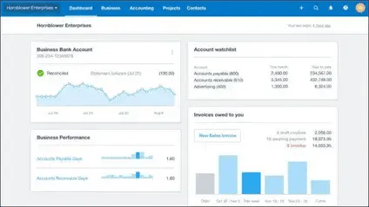
Software akuntansi Xero sudah menggunakan sistem cloud computing yang artinya Anda tidak perlu menginstalnya lagi di PC (Personal Computer). Anda dapat mengakses laporan keuangan perusahaan atau cash flow secara real time asalkan terhubung dengan internet.

By Industries
By Functions
Featured Blog

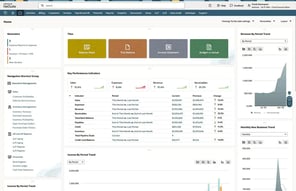
Dashbor NetSuite adalah salah satu bagian terpenting NetSuite. Memiliki dasbord yang terkonfigurasi dengan benar sangat penting bagi setiap karyawan untuk dapat dengan cepat menavigasi ke data yang mereka perlukan untuk melihat dan mengawasi tren penting.

By Functions
Discover accounting and technology solutions
designed to streamline operations, boost efficiency,
and empower growth for your small business.

Xero Accounting Software
Xero is a cloud-based accounting software that simplifies
invoicing, bank reconciliation, payroll, and expense tracking,
helping businesses manage finances efficiently and in real-time.
Featured Blog

In a remarkable achievement, Xero has been named one of the World’s Top 250 Fintech Companies for 2024 by CNBC. This recognition underscores Xero’s unwavering commitment to innovation, technology, and providing world-class cloud accounting solutions for businesses worldwide.
-1.webp?width=287&height=191&name=Xero%20Recognized%20Among%20the%20Worlds%20Top%20250%20Fintech%20Companies%20in%202024%20(feature%20blog)-1.webp)
Learn about our people, values, and more
About Us Overview →
Our Commitment
Featured Blog
The award underscores Logiframe's position as a trusted partner in leveraging NetSuite solution to drive business success and operational efficiency. This achievement reflects Logiframe's dedication to staying at the forefront of technology and providing outstanding solutions in the dynamic landscape of ERP.
.webp?width=409&height=289&name=Untitled%20design%20(11).webp)
Knowledge
Comparison
Event
Featured Blog
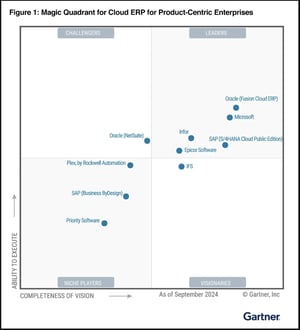
In Cloud ERP for Wholesale and Distribution, NetSuite is the strong Challenger in Gartner's Magic Quadrant for Product-Centric Enterprises. Yes, large ERP vendors dominate the market with Oracle Fusion Cloud ERP, SAP S/4HANA Cloud, and Microsoft Dynamics 365, but NetSuite provides the ideal solution to mid-market wholesale and distribution businesses by delivering robust functionality without excessive costs or complexity.

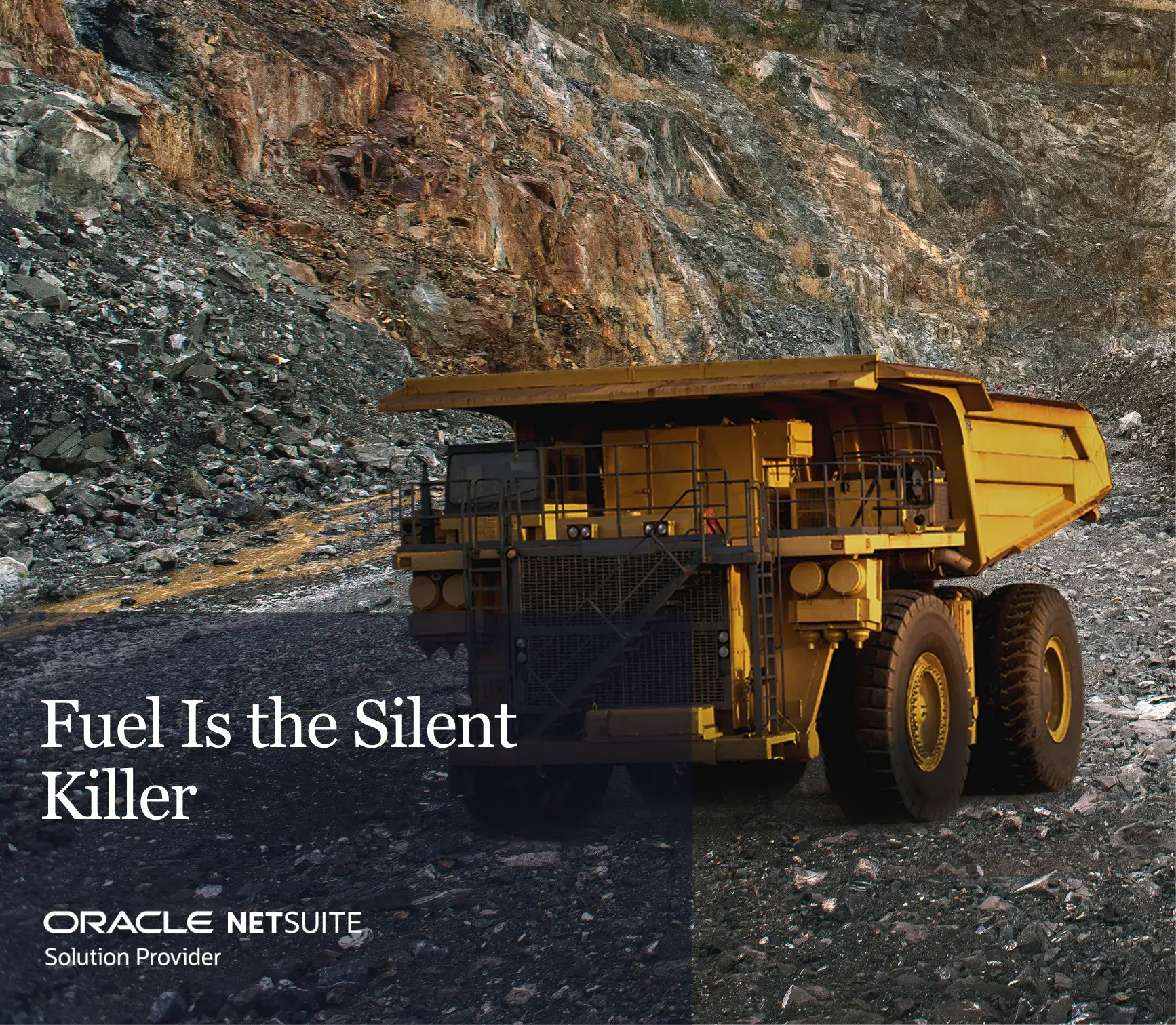
For coal mining contractors, fuel is rarely the headline issue. Safety incidents, production shortfalls, equipment breakdowns, and contract pricing tend to dominate management attention. Fuel, by contrast, is often treated as an unavoidable operating expense large, but familiar.
This is precisely why fuel is so dangerous.
Across many mining contractor operations, fuel is the largest variable cost and one of the least controlled. It does not fail loudly. It erodes margins quietly, day after day, shift after shift, often without triggering alarms. By the time the problem is visible in financial statements, the losses are already embedded in thousands of operating hours and millions of liters consumed.
This article explains why fuel is the silent killer of mining contractor profitability, where fuel losses actually occur, why traditional controls consistently fail, and how disciplined contractors use integrated ERP systems to regain control without disrupting operations.
Table of Contents:
1. Fuel Economics in Coal Mining Contractors
2. Why Fuel Losses Are Rarely Obvious
3. Where Fuel Losses Actually Occur
4. The Behavioral Dimension of Fuel Loss
5. Why Traditional Controls Fail
6. Fuel Control as a Financial Process
7. How NetSuite Enables Fuel Discipline
8. Restoring Discipline Without Slowing Operations
9. Strategic Benefits Beyond Cost Reduction
10. Final Thoughts
In open-pit coal mining, fuel typically represents 20–35 percent of total operating cost, depending on strip ratio, haul distance, fleet composition, and equipment utilization. For contractors operating large truck-and-excavator fleets, fuel expenses can reach tens or hundreds of millions of dollars annually.
Unlike fixed costs such as depreciation or lease payments, fuel is:
Small inefficiencies, when multiplied across large fleets and long operating hours, become structurally material.
A one to two percent fuel leakage rate may sound insignificant. At scale, it can eliminate most of a contractor’s operating margin.
Fuel-related losses persist because they are difficult to isolate and easy to rationalize.
Production remains on target. Equipment continues to run. Fuel tanks are replenished regularly. Variances are explained away as weather, pit conditions, or temporary inefficiencies.
Fuel problems rarely manifest as sudden spikes. Instead, they appear as:
Because fuel is consumed everywhere, responsibility is often diffuse. No single function fully owns the economic outcome.
Fuel losses in mining contractor operations are rarely the result of a single issue. They arise from a combination of control gaps, process weaknesses, and behavioral incentives.
Theft and Leakage: The Obvious but Incomplete Explanation
Fuel theft does exist, particularly in remote sites where fuel is valuable and oversight is limited. It can occur through:
However, focusing only on theft is misleading. In many cases, process leakage costs more than intentional theft.
Also Read: Apa Itu Sistem ERP? Definisi, Konsep, dan Manfaatnya
A common weakness in mining operations is the lack of systematic reconciliation between:
Fuel may be issued based on shift plans or historical averages rather than actual equipment usage. Consumption is assumed rather than measured. Variances accumulate quietly.
Without structured reconciliation, management cannot distinguish between:
Fuel simply “disappears” into averages.
Many sites still rely on manual fuel logs:
These methods are labor-intensive, error-prone, and vulnerable to manipulation. More importantly, they are retrospective. They tell management what happened, not what is happening.
When discrepancies are discovered, they are often weeks old, disconnected from the operational context that created them.
Fuel is often monitored as a total expense or as a percentage of operating cost. While useful at a high level, this view obscures operational drivers.
Fuel is not a fixed ratio. It is influenced daily by:
When fuel is managed only at an aggregate level, these drivers remain invisible.
Fuel control is not purely a technical problem. It is a behavioral one.
When operators and supervisors are measured primarily on production volume, fuel efficiency becomes secondary. When fuel variance has no clear owner, accountability diffuses. When finance reports fuel overruns weeks after the fact, operational teams feel disconnected from the outcome.
In such environments, fuel inefficiency becomes normalized. It is treated as the cost of doing business rather than a controllable variable.
Also Read: NetSuite Multi-Entity Consolidation | Streamline Group Operations
Why Traditional Controls Fail
Many contractors attempt to address fuel losses through tighter rules:
These measures often increase administrative burden without solving the underlying problem.
Traditional controls fail because they are:
They generate data, but not understanding.
Disciplined contractors approach fuel not as an operational nuisance but as a financial process embedded in daily operations.
This requires:
Achieving this consistently requires integrated systems.
NetSuite does not replace on-site fueling systems or equipment telemetry. It provides the financial control layer that connects fuel activity to cost, productivity, and profitability.
Inventory Management for Fuel as a Strategic Asset
Fuel is treated as inventory, not merely a consumable. Stock levels, receipts, transfers, and usage are recorded systematically, creating a reliable baseline for control.
This alone eliminates many reconciliation gaps by ensuring that every liter issued is accounted for financially.
Fuel issuance can be linked directly to:
This transforms fuel from a pooled expense into a traceable cost driver. Management can see which equipment or activities consume fuel disproportionately relative to output.
NetSuite enables structured reconciliation between:
Instead of reviewing totals, management focuses on exceptions:
This shifts fuel control from reactive investigation to proactive management.
Because NetSuite integrates inventory, procurement, project costing, and financials, fuel consumption flows directly into cost per BCM and cash flow analysis.
Management can see how fuel inefficiency:
Fuel stops being an abstract cost and becomes a visible economic driver.
One of the biggest fears in mining operations is that tighter control will slow production. Disciplined contractors avoid this by focusing on visibility rather than bureaucracy.
When fuel data is timely, consistent, and trusted:
Control improves without adding friction.
Effective fuel control delivers benefits beyond immediate savings.
It improves bid accuracy by providing reliable historical fuel consumption data. It strengthens contract renegotiations by grounding discussions in facts. It enhances credibility with mine owners and auditors. It also creates a foundation for future automation and analytics.
Most importantly, it restores management confidence that one of the largest cost drivers in the business is understood and under control.
Fuel does not destroy mining contractor margins through dramatic failures. It does so through quiet, persistent leakage enabled by weak visibility and fragmented control.
Contractors that continue to treat fuel as an unavoidable expense will remain vulnerable, regardless of coal prices or production volumes. Those that treat fuel as a financially managed process gain a durable advantage.
By combining operational discipline with integrated systems such as NetSuite, mining contractors can transform fuel from a silent killer into a controlled variable, protecting margins and strengthening long-term resilience.
15 min read
In the coal industry, headlines are dominated by coal prices. When prices surge, optimism follows. When prices fall, budgets tighten and projects are...
15 min read
Turning Mining Production Data into Financial Insight In coal mining contractor businesses, vast amounts of data are generated every day. Bank cubic...
8 min read
Sales forecasting is a critical process for business success, enabling organizations to make informed decisions and plan effectively. This article...