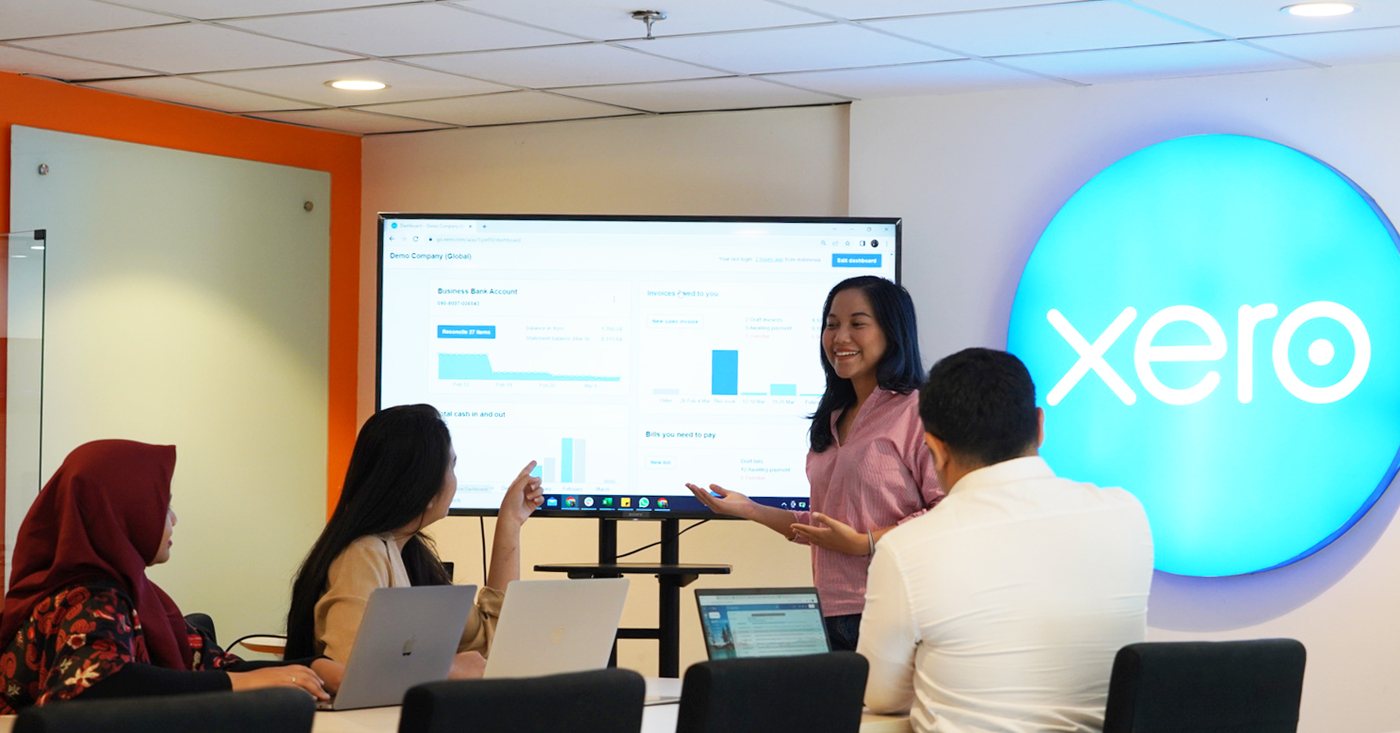
Accounting, tax, payroll and back-office work for businesses in Indonesia, run in Xero by our team in Jakarta and Tangerang.
ACCOUNTING OUTSOURCING
Guides to running Xero properly, written from monthly practice rather than from the product documentation.
THE XERO HANDBOOK
Oracle NetSuite implementation, support and custom development for growing and multi-entity businesses in Indonesia.
NETSUITE OVERVIEW
HubSpot CRM implementation, marketing and sales setup, and connecting HubSpot to your accounting system.
HUBSPOT OVERVIEW
Plain explanations of Xero, NetSuite and HubSpot, and side-by-side comparisons to help you choose.
RESOURCE CENTER
Layanan akuntansi, pajak, penggajian dan back office kami, dijelaskan dalam Bahasa Indonesia.
OUTSOURCING AKUNTANSI
Thirteen years on one platform, with offices in Jakarta and Tangerang.
ABOUT LOGIFRAMELogiframe
Written from running Xero files every month, not from the documentation. Xero’s own guidance tells you where the button is. This carries on to the part that decides whether your books are actually right, and says so plainly when the answer is that Xero is the wrong tool for what you are trying to do.

The point of view
Almost everything written about Xero falls into one of two piles. There is the official documentation, which is accurate and tells you where to click. And there is marketing, which tells you the platform is easy. Neither addresses the questions that actually consume a month of somebody’s working life.
Should the conversion date be the start of the year or the start of the quarter. Whether department belongs in the chart of accounts or in a tracking category. Why the reconcile screen is empty and the account still does not agree with the bank statement. Whether a sales channel should post every transaction or a daily summary, and what it costs to change your mind about that in a year. What a closed month should mean before somebody signs it.
Those are the questions we answer here, because they are the ones we answer for clients. Everything in this handbook is written by people who open these files on a Tuesday morning, not by people who read the release notes.
It follows that we are willing to write things a software partner would usually leave out. That an integration is not worth its subscription. That a firm should keep the setup it has rather than migrate. That some organisations have outgrown Xero and should stop trying to make it fit. A handbook that only ever recommends more is a brochure, and you can tell the difference within two paragraphs.
What we see
Different industries, different sizes, the same four findings. If you recognise more than one of these, the handbook below is organised so you can go straight to it.
Xero’s reconcile screen clears when every line has been matched to something. That is a data-entry milestone, not an accounting one. The account is reconciled when its balance agrees with the bank statement and every difference is a listed, explained item. The gap between those two states is where duplicates, missing transactions and guessed codings sit quietly for months. It is the single most common thing we find, and it is usually in files where somebody has been diligently clearing the queue every week. More on this.
A chart of accounts built for a one-entity business with four expense categories is still in place three years later, now carrying departments as account codes and a tracking category nobody applies consistently. Nothing broke, so nothing got revisited. The symptom is not an error. It is that reporting takes a week and nobody trusts the result. Most files described to us as broken are files that were correct for a business that no longer exists. More on this.
Conversion date. Chart of accounts structure. Which two dimensions get the tracking categories. Whether a high-volume channel posts in detail or as a summary. Each of those takes ten minutes at setup and months to unwind later, because reversing them means recoding history and rebuilding the comparatives. Almost nobody is told this at the point of deciding, which is why we put the list on its own page. More on this.
When a file does not reconcile, the cause is almost never Xero and almost never the connected system. It is the step between them that a person has to perform: the journal that was skipped, the summary that never tied to the deposit, the clearing account nobody has emptied since the integration was switched on. Software fails loudly. Processes fail quietly, and the first symptom is a month that will not close. More on this.
The handbook
Ten guides, grouped by what you are trying to do rather than by feature. Each stands on its own, so there is no order to follow.
The decisions made in the first fortnight shape the file for as long as it exists. These two cover whether Xero is the right answer for you, and what to get right before anything is entered.
The recurring work, in the order it happens. Most of what goes wrong in a set of books goes wrong here, quietly, in a file that looks like it is being kept up to date.
Running itGuideMonthly BookkeepingWhat actually happens each month, and what should be done before the close begins.Read the guide
Running itGuideBank ReconciliationWhy a cleared queue is not the same as an account that agrees with the bank.Read the guide
Running itGuideAccounts PayableBills in, approved and paid, without the ledger becoming the approval system.Read the guide
Running itGuideAccounts ReceivableInvoices out and reminders that run themselves, with the customer relationship left where it belongs.Read the guide
Running itGuideMonth-End CloseWhat a closed month should mean, and what has to be true before you sign it.Read the guide Being months or years out of date is more common than the software marketing suggests, and it is fixable. These two cover finding out what state you are actually in, and the order in which to put it right.
Once the monthly work is reliable, the questions change. What should connect to the ledger, which connections earn their place, and where the seams between systems need watching.
We keep the books for businesses in Indonesia, led from Jakarta with a second office in Tangerang: the monthly bookkeeping, the close, and the systems that produce the numbers underneath. Thirteen years of doing that work is what this handbook is written from.
Logiframe is a Xero Gold Champion Partner and Certified Advisor.
Learn more
Send us the file and we will tell you, in writing, with the specific items rather than a general opinion.
Book a free 30-minute call